Skip to content

Home / Coffee Machine Guides
Coffee Machine Guides
Keep up to date with the latest coffee machine guides and information.
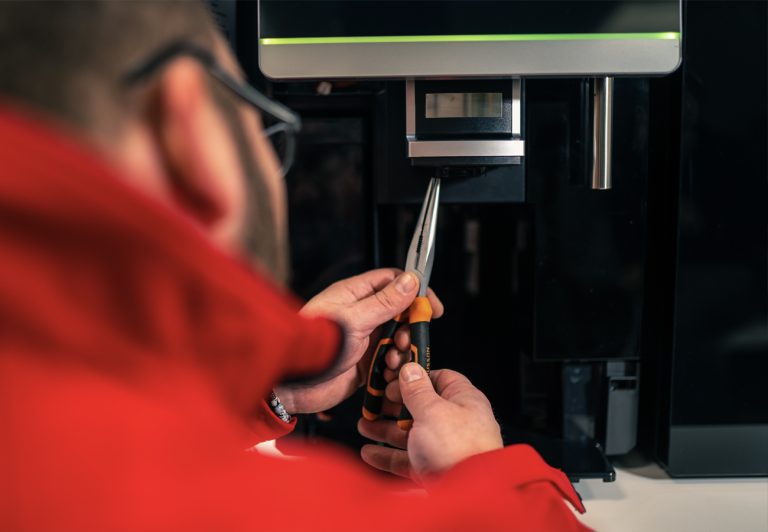
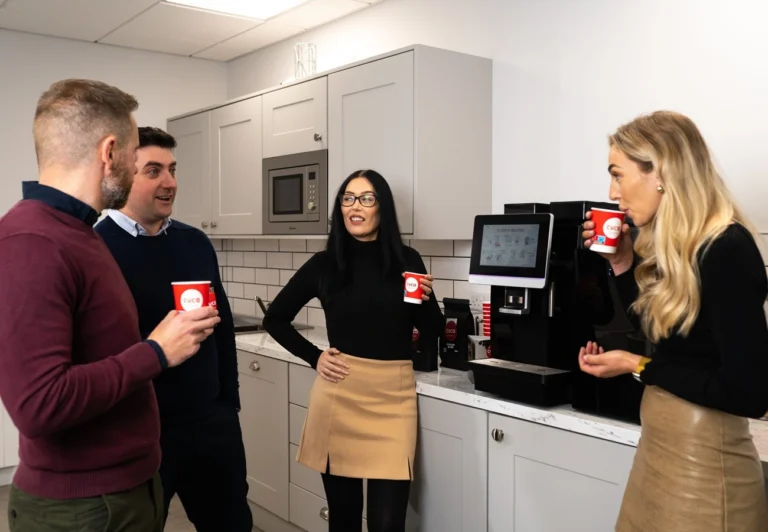
How Weekly Coffee Machine Servicing Saves You Time and Money
Regular servicing keeps a commercial coffee machine clean, safe and running well, which means fewer breakdowns, better-tasting coffee and a longer working life. A weekly visit from a professional team handles the cleaning, checks and restocking for you, so your staff are never left without coffee and you are not paying for repairs you could have avoided. For most Irish workplaces, weekly servicing is the difference between a machine that quietly does its job and one that turns into a recurring headache.
Why servicing matters more than people think
A coffee machine in a busy office can make hundreds of drinks a week. That is a lot of milk, coffee oils, limescale and daily wear passing through it. Left unchecked, all of that builds up. The coffee starts to taste off, drinks slow down, and small faults quietly turn into full breakdowns.
Servicing is simply staying ahead of that. This guide is about professional weekly servicing, not the day-to-day cleaning your own team can do between visits. Here we look at what a proper service actually involves and why it pays for itself many times over.
What happens during a weekly service visit
A good service is more than a quick wipe-down. Here is what a proper weekly visit covers, step by step.
1. A performance check. The technician looks at how the machine is running, including drink temperature, pour speed and quality, so anything drifting off is caught early.
2. Deep cleaning of the coffee and milk systems. The brew unit, milk system, drip tray and spouts are cleaned properly. This is the part that most affects both taste and hygiene.
3. Descaling and water checks. Limescale is the biggest silent killer of coffee machines in hard-water areas. The team keeps it in check and changes water filters when needed.
4. Calibration and a safety check. Grind, dose and temperature are checked so every cup stays consistent, and the electrical and safety points are looked over.
5. Restocking and supplies. Your beans and supplies are topped up during the visit so you are not caught short mid-week, and cleaning products and filters are covered by the service.
6. Spotting problems before they become breakdowns. Worn seals, a struggling pump or an early fault get flagged and sorted before they leave you without coffee.
At Cuco, this weekly visit is carried out by our own Quality Team, not an outside contractor, and it is included free with every package.
The real cost of machine downtime
When an office coffee machine stops working, the cost is rarely just the repair bill. The knock-on effects usually add up to far more.
- Lost time. Staff head out to the nearest cafe, and a five-minute coffee break quietly becomes twenty.
- A poor impression. A broken machine in reception or a meeting room is one of the first things a visitor notices.
- Wasted spend. People buy takeaway coffee instead, and that adds up quickly across a whole team.
- Pressure on your facilities team. Chasing a repair, waiting for a call-out and fielding complaints all land on someone’s desk.
A machine that is serviced every week rarely gets to this point, because the faults that cause sudden breakdowns are usually the ones a regular service would have caught first.
Professional servicing vs doing it yourself
Both have a place. It helps to be clear on what each one actually covers.
What your own team can do
The daily basics. Wiping the machine down, emptying the drip tray, rinsing the milk system, refilling beans and running the built-in cleaning cycle. This keeps things ticking over between visits.
What professional servicing covers
Everything that needs tools, training or parts. Deep cleaning inside the machine, descaling, replacing worn parts, calibration, and catching mechanical faults early. It also takes the whole job off your team’s plate.
The honest version is this. Day-to-day cleaning by staff matters, but it is not a replacement for a proper service. Most workplaces do not have the time, the parts or the technical knowledge to keep a commercial machine in top condition on their own. Professional servicing fills that gap, and weekly servicing keeps the gap from ever opening.
How regular servicing extends machine lifespan
A well-maintained commercial coffee machine can last between five and ten years. A neglected one can start failing far sooner. The reason is simple. Most machine failures build up slowly rather than all at once.
Limescale narrows the pipes and strains the boiler. Old seals begin to leak. A worn grinder produces uneven coffee and works harder than it should. Regular servicing deals with each of these before they cause real damage. Over the life of a machine, that is the difference between one you have to replace early and one that keeps earning its place for years.
It also protects the quality of every cup. Coffee is sensitive to cleanliness, water quality and temperature. Keep those three right and the coffee stays good. Let them slip and even the best beans taste flat.
What to expect from a good service provider
Not all servicing is equal. Before you commit to a supplier, check what their service really includes.
- How often they visit. Weekly scheduled servicing is very different from reactive, only-when-it-breaks support. Ask which one you are actually getting.
- Who does the work. Ask whether it is the provider’s own team or an outside contractor. An in-house team usually means faster, more consistent service. Every Cuco visit is done by our own Quality Team.
- Response times if something goes wrong. Find out how quickly they can get to you. Cuco’s own team usually responds within two hours, and emergency call-outs and repairs are free.
- What is included. Check what the monthly fee actually covers. With Cuco, weekly servicing, maintenance, repairs, emergency call-outs, cleaning products and filters are all free of charge. The only costs are the monthly rental fee and the coffee your team drinks, which is supplied separately.
- Hygiene standards. A machine used by a whole workforce needs the milk and brew systems cleaned properly. This is a health and food-safety point, not just a taste one.
- Contract flexibility. Long lock-ins are common in this industry. Cuco starts with a three-month initial term that works as an extended trial, then moves to a rolling twelve-month arrangement rather than a multi-year lock-in.
The Cuco approach in short
Every Cuco package includes free weekly servicing carried out by our own team. We install the machine, rent it to you on flexible terms, and then keep it running with a weekly visit that cleans, checks and restocks it for you. You get consistent coffee and none of the upkeep, and if anything ever goes wrong, emergency call-outs and repairs are free. From the Cuco 50 to the Cuco 200, every machine includes our renowned servicing package as standard.
Frequently Asked Questions
How often should a commercial coffee machine be serviced?
For a busy workplace, weekly servicing is ideal. It keeps the machine clean, catches faults early and keeps the coffee consistent. Lighter-use machines can go a little longer between services, but weekly is the safest routine for an office that makes a lot of drinks. Cuco includes weekly servicing free with every package.
What does a coffee machine service include?
A full service covers deep cleaning of the brew and milk systems, descaling, water filter checks, calibration of grind and temperature, a safety check and restocking during the visit. The technician also looks for early signs of wear, so small issues get fixed before they cause a breakdown.
Can I service a commercial coffee machine myself?
Your team can handle the daily cleaning, rinsing the milk system and refilling the beans. A full service, though, needs tools, parts and training, so it is best left to a professional. Regular professional servicing is what keeps a commercial machine reliable and safe over the long term.
What happens if my coffee machine breaks down?
If your machine develops a fault, a good provider responds quickly to get it working again. With Cuco, our own team handles repairs directly, usually within two hours, and emergency call-outs and repairs are covered at no extra charge. You are not left waiting on an outside contractor, and weekly servicing means most breakdowns are prevented before they happen.
Does servicing really save money?
Yes. Regular servicing prevents the expensive breakdowns and early replacements that come from neglect, and it protects coffee quality so you are not wasting beans on poor drinks. It also saves staff time and the cost of takeaway coffee during downtime. For most businesses, weekly servicing costs far less than the problems it prevents.
If you would rather not think about servicing at all, that is the whole idea behind how Cuco works. Every machine comes with free servicing from our own team, so your coffee just works. Get in touch or book a free tasting to see what suits your workplace.
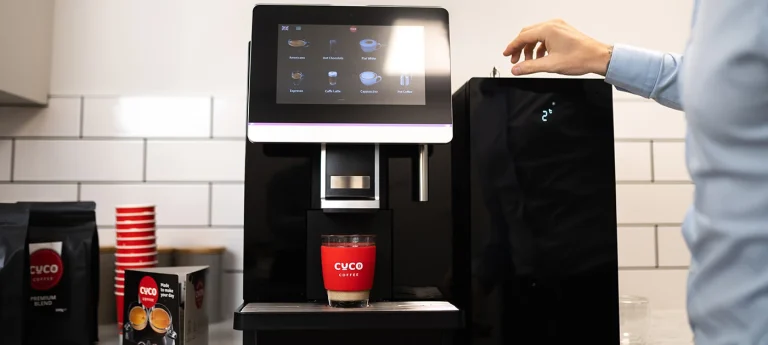
How to Set Up an Office Tea & Coffee Station | Cuco Coffee
A tea and coffee station sounds like a small thing to plan. In practice, it’s one of the most used spots in any office. People head there first thing in the morning, during meetings, before calls, between tasks, and whenever they need a break from their screen. If it works well, nobody notices. If it doesn’t, everybody notices.
This guide walks you through how to set up a tea and coffee station that actually works for your team. We’ll cover where to put it, what you need, what you don’t need, and the practical details that most offices get wrong the first time round. The advice here applies whether you’re setting up a station from scratch in a new office or upgrading one that’s no longer fit for purpose.
Planning the Location: Where to Put It
Location matters more than most people think. A well-placed station becomes a natural gathering point where people bump into each other, have quick conversations, and leave feeling better than when they arrived. A badly placed one creates queues, blocks corridors, and annoys everyone within earshot.
What to look for in a spot
You want somewhere with enough space for two or three people to stand comfortably without anyone feeling crowded. You also want access to power, water if possible, and a bin nearby. A corner of the kitchen is ideal in most offices. If you don’t have a dedicated kitchen, a wide section of counter in a staff break area works well too.
Avoid placing a coffee station directly next to someone’s desk, in a main walkway, or in a meeting room that gets regular use. The noise of a bean-to-cup grinder, the chatter of people waiting for a cup, and the occasional spilled drink all become problems when the station is too close to where people are trying to work.
Thinking about access and flow
Watch how people move through your office for a day. Where do they naturally pass? Where do they stop? A good coffee station sits on a natural path, so getting to it doesn’t feel like a detour. It also has enough room around it that people can wait for a drink without blocking anyone trying to pass through.
If your team is spread across multiple floors, consider whether one station is enough or whether you need a smaller secondary setup on another floor. In offices with more than around 40 people, a single machine on the ground floor often creates queues at peak times. Adding a smaller machine elsewhere spreads the demand and keeps things moving.
Creating a Complete Workplace Refreshment Station
A proper workplace refreshment station doesn’t need much, but what you do have needs to be right. Here’s a practical checklist of what most offices actually need.
The machine or machines
This is the heart of the station. Most offices go with a commercial bean-to-cup machine because it covers espresso, Americano, cappuccino, latte, flat white, macchiato, and hot chocolate from one unit. That covers the vast majority of drink requests in a typical workplace. Our Cuco 50, Cuco 100, and Cuco 200 machines all serve this range, and the right model depends on your team size and daily cup volume.
Coffee is the centre of the station, but it is rarely the whole of it, and Cuco supply the rest of the canteen too. A dedicated hot chocolate machine takes the pressure off the coffee machine in offices where chocolate drinks are popular. A hot water boiler gives tea drinkers instant boiling water at the right temperature, which neither a kettle nor a coffee machine’s hot water tap can match at volume. A multifunction water tap covers chilled, sparkling and boiling water from a single point, which frees up counter space and removes the fridge full of plastic bottles. A Bevi flavoured water machine adds still and sparkling flavoured options for people who want something other than a hot drink. An ice machine earns its place the first warm week of the year. None of this is essential on day one, and many offices run perfectly well on a single bean-to-cup machine. The point is that you can add to the station later without bringing in a second supplier.
Tea supplies
Ireland drinks a lot of tea, and it would be a mistake to build a coffee station without thinking about tea drinkers. A basic tea setup needs a source of properly hot water (more on that in a moment), a decent selection of teabags, and somewhere to put used teabags that isn’t the kitchen sink.
For the tea selection, a small range works better than a huge one. A standard black tea that most people drink every day, one or two herbal options like peppermint and chamomile, and a green tea covers almost everyone. Offices that try to stock 15 different teas end up with half of them going stale.
Cups, mugs, and consumables
You have three options here and they’re not mutually exclusive. Ceramic mugs are the best option for regular use. They feel proper, they don’t create waste, and people tend to look after them. The downside is someone has to wash them. Most offices solve this with a dishwasher, which pays for itself quickly once you factor in the cost of disposables.
Reusable takeaway cups are useful for people moving between meetings or working from different spots. Compostable cups are worth keeping on hand for visitors and for days when the dishwasher is full. Both of these are available as part of our Cuco range, so you don’t need to sort out a separate supplier.
Milk and milk alternatives
Every Cuco machine comes with a milk fridge included, so there is no need to buy an undercounter unit separately. The only reason to add a second fridge is to hold stock, and for a team of 20 to 40 people that is rarely necessary. Keeping the milk at the station also saves people walking across the office every time they want to top up their coffee.
On milk alternatives, ask your team what they actually use rather than guessing. Oat milk has become the most common alternative in Irish offices, followed by almond and soya. Stocking one or two alternatives covers most needs. Buying five varieties means most of them will go off before anyone finishes them.
The small stuff that matters
A few practical items that offices regularly forget:
- A bin close to the station, ideally one that separates general waste, recyclables, and food waste. Nobody wants to walk across the office to throw out a coffee cup.
- Sugar, sweeteners, and stirrers somewhere accessible but not cluttering the counter.
- A cloth or roll of kitchen paper for wiping up spills. Spills happen. A station without something to clean them up looks neglected quickly.
- A small tray or mat under the machine to catch drips.
- A surface wipe or spray that’s appropriate for food contact areas.
Machine Options: What Actually Works for Offices
There are three broad categories of machine worth considering, and they’re not equivalent. Here’s a quick comparison.
| Machine type | Best for | Watch out for |
|---|---|---|
| Commercial bean-to-cup | Most offices. Covers every standard drink, serves consistent quality, simple to use. | Needs proper servicing to keep quality up. A neglected machine quickly produces poor drinks. |
| Instant coffee setup | Very small offices (under 10 people) or as a backup. | Drink quality is a long way below bean-to-cup. Most teams quickly feel the difference. |
| Hot water boiler | Offices with a lot of tea drinkers, or as an addition to a coffee machine. | Doesn’t make coffee. Best used alongside a bean-to-cup, not instead of one. |
For almost every office we work with in Ireland, a commercial bean-to-cup machine ends up being the centre of the station. It handles coffee, hot chocolate, and hot water for tea from one unit, which keeps the station tidy and the setup simple. A dedicated hot water boiler can be added later if tea demand is particularly high.
Making Tea Work Alongside Coffee
Coffee stations often forget about tea drinkers until after the station is set up, and then the tea provision feels like an afterthought. It doesn’t have to.
The easiest way to serve tea properly alongside coffee is to use the hot water tap on your bean-to-cup machine. All our machines have one, and the water comes out at the right temperature for most teas. For offices where tea volume is high, adding a dedicated hot water boiler is a better option. A boiler delivers instant hot water at a proper temperature, handles higher volumes than a coffee machine’s hot water tap, and takes the pressure off the main machine during morning rushes.
Keep the tea supplies close to the hot water source. A small storage container or wooden box on the counter works well. Group similar teas together: black teas in one section, herbal in another. A teaspoon or two on a saucer avoids people hunting through drawers.
One thing worth thinking about:
If your office has a lot of tea drinkers, the hot water demand can actually exceed the coffee demand. That’s worth factoring in when you decide whether a single machine is enough or whether a boiler makes sense.
Our Cuco Water Boiler is designed exactly for this kind of setup.
Hygiene and Health & Safety: The Practical Side
Any space where food and drink are served needs a baseline of hygiene, and a coffee station is no exception. This doesn’t need to be complicated, but it does need to be consistent.
Daily cleaning
The counter, the machine exterior, and the milk fridge all benefit from a quick wipe-down at the end of each day. Somebody on the team usually takes this on informally, or it can be added to a cleaning contractor’s scope if you have one. Either way, the standard is simple: the station should look clean when people arrive each morning.
Machine maintenance
This is where things get easier with a rental arrangement. Every Cuco rental comes with weekly on-site servicing from our own Cuco Quality Team. They look after the machine, carry out the necessary checks, and make sure everything is ready for daily use. That takes the main hygiene burden off your team. If you’re buying a machine outright, you’ll need to arrange this separately, and it matters more than most people realise. A bean-to-cup machine that isn’t descaled properly develops taste issues and eventually breaks down.
Food safety basics
Milk should be stored at or below 5 degrees Celsius. The fridge should be checked periodically to confirm it’s hitting that temperature. Open milk cartons should be dated and used within a few days, or replaced. Used teabags and coffee grounds should go in a food waste or general waste bin, not down the sink where they’ll cause plumbing issues over time.
None of this requires a formal food safety certification for a typical office setup, but following these basics keeps things sensible. Offices in certain regulated sectors (healthcare, food production, pharma) have stricter requirements,and the machine choice itself may need to meet specific hygiene certifications. If that applies to you, it’s worth raising when you’re specifying the setup.
Managed or Self-Managed: Which Approach Fits
Every coffee station is either managed by someone on your team or managed by a supplier. There’s no third option. The question is which arrangement suits your office.
Self-managed setups
Someone on your team buys the machine, orders the beans, arranges servicing, handles repairs, and sorts out any issues. This works in very small offices where coffee usage is low and the person doing it doesn’t mind the overhead. It falls apart in medium-sized and larger offices because the person managing it gets drawn into a steady stream of small tasks that aren’t part of their actual job. When they leave or change roles, the whole thing lands on someone else.
The other issue with self-managed setups is that most people aren’t trained to service a commercial bean-to-cup machine. The machine works fine for a while, then gradually deteriorates as scale builds up and parts wear. Most self-managed offices don’t notice until the coffee is already bad or the machine has broken down.
Managed setups
A supplier handles the machine, the maintenance, the beans, and the consumables. Your team gets to focus on work. At Cuco, our rental arrangements include weekly on-site servicing from the Cuco Quality Team, plus restocking, repairs, and support. If something goes wrong, you call us and we sort it.
For most Irish offices, this is the more sensible option. The cost is predictable, the quality stays consistent, and nobody on your team ends up accidentally owning the coffee operation. It also scales: as your team grows, we can switch or add machines without you having to re-tender the whole setup.
Frequently Asked Questions
How much space do I need for a tea and coffee station?
A compact station with a single bean-to-cup machine, a small fridge, and storage for tea and consumables needs about 1.5 to 2 metres of counter space. Larger stations with a second machine or boiler need more. Most office kitchens have enough room without needing to be redesigned.
Do I need a plumbed water connection?
It helps, but it isn’t always essential. Some of our machines can run off a refillable tank, which means no plumbing work is needed. Plumbed machines are more convenient for busy offices because nobody has to remember to refill anything. When we visit for the free tasting, we’ll advise on which setup works for your space.
How many teabags and coffee beans should I keep on hand?
As a rough guide, stock around two weeks of usage based on team size. For an office of 20 people, that’s roughly 2 kilograms of coffee beans and around 200 to 300 teabags. Our weekly servicing visits keep the machine topped up, and we deliver more coffee when you need stock rather than to a fixed schedule, so you are not holding a large buffer or tracking levels yourself.
Can I set up a coffee station without a dishwasher?
Yes, but it’s easier with one. If you’re relying on handwashing, the station will need a sink close by. Alternatively, offer a mix of ceramic mugs for people who’ll clean up after themselves and reusable or compostable cups for those who won’t.
What about offices where employees work hybrid or part-time?
Hybrid offices need to size the station for their busiest days, not their average days. If you have 40 people registered but only 25 typically in on any given day, size for 25 with some headroom. Remember that the busiest days (usually Tuesday to Thursday) will push numbers higher.
Should I get professional help setting this up?
For a simple station with a domestic machine, you can probably do it yourself. For anything involving a commercial bean-to-cup machine, it’s worth having a specialist handle the installation. At Cuco, we start with a site survey. We assess the space, talk through how your team works, and recommend the machine that fits. You then get a free one-week trial to test it in your own office before committing to anything. Once you decide, we deliver, install, commission, and train your team on how to use the machine as standard. Your setup is ready to use the same day.
Ready to Set Up Your Office Coffee Station?
A good tea and coffee station doesn’t take long to plan once you know what you need. The harder part is getting the right machine for your space and making sure it stays running once it’s in.
That’s where we come in. At Cuco Coffee, we work with offices across Ireland to set up and manage coffee stations from the ground up. We’ll visit your workplace, bring a machine for a free tasting, and recommend a setup that fits your team and your space. Every rental includes weekly servicing from the Cuco Quality Team, restocking, and support. You focus on the work. We’ll look after the coffee.
Call us on +353 1 526 7433 or get in touch to book a free coffee tasting at your office.
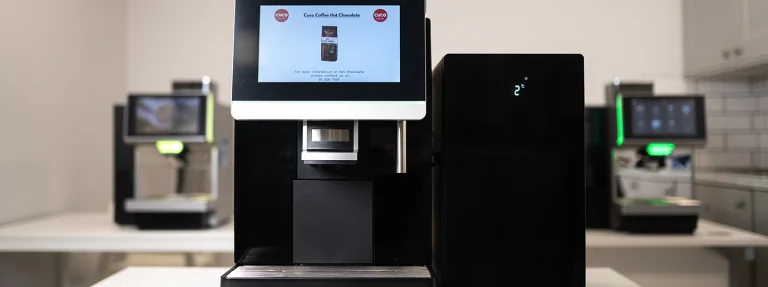
Coffee Machines for Different Industries: Which Setup Works Best?
The same coffee machine can be a sound decision in one building and the wrong call two streets away. A forty-person accountancy firm and a busy day surgery might order broadly the same drinks, but when those drinks get made, where the machine sits and who presses the button are nothing alike.
Cuco Coffee supplies workplaces across Ireland, including but not limited to healthcare, manufacturing, construction, technology, financial services and law. What follows is a practical look at what changes from sector to sector, and which machine tends to make sense where. If you already know your sector, skip to it.
Why one size does not fit all
Before comparing models, three questions do most of the work.
How many cups, and how fast? A daily total tells you half the story. Sixty cups spread across eight hours is a very different job to sixty cups in the twenty minutes after a shift change. This is where most setups fail, and it is why the hourly output figure deserves more attention than it usually gets.
Where will the machine live? A staff room, a canteen, a reception desk and a site office each bring their own limits on space and power. Plenty of otherwise sensible plans come apart at this point.
Who is using it? A machine used by the same twenty colleagues every day can be more involved than one used by patients, visitors or clients who will only ever meet it once. The wider the audience, the more that ease of selection matters.
Headcount gives you a starting bracket. As a rough guide, 20 to 35 staff suits a small machine, 35 to 50 a medium one, 50 to 100 a large one, and anything above 100 usually needs more than a single machine. Below 20 people, a domestic machine can often cope. Treat those brackets as a first pass, then check the hourly figure against your busiest moment of the day.
The Cuco range at a glance
Three machines cover the whole range. The Cuco 50 and Cuco 100 serve the same 24 speciality drinks, and the Cuco 200 stretches to 32, so the decision comes down mainly to output, footprint and how hard the machine will be pushed at peak.
| Cuco 50 | Cuco 100 | Cuco 200 | What it tells you | |
|---|---|---|---|---|
| Advised daily output | 50 cups | 100 cups | 200 cups | Total demand across the day |
| Hourly output | 30 cups | 85 cups | 100 cups | Whether a queue forms at peak |
| Speciality drinks | 24 | 24 | 32 | Two share a menu; the 200 adds more |
| Bean hopper | 250g | 1,200g | 1,200g | How often it needs topping up |
| Water | 4L tank option | Mains fed, or 8L tank | Mains fed, or 4L tank | Plumbing constraints |
| Touch screen | 7.1 inch | 10.1 inch | 10.1 inch | Ease of use for occasional users |
| Weight | 14kg | 19kg | 26.5kg | Counter and mounting limits |
The jump worth noticing is between the Cuco 50 and the Cuco 100. Daily output doubles, but hourly output nearly triples, from 30 cups to 85. If your problem is a rush rather than a total, that is the step that solves it.
Healthcare: the sector with the fewest predictable breaks
Healthcare asks more of a coffee machine than anywhere else. Cuco supplies coffee machines for healthcare across Ireland, from small medical clinics through nursing and care homes to larger hospital sites, and the same pattern shows up every time: the machine is serving staff, patients and visitors at once, and it never really gets a quiet hour.
Two things follow. First, the drinks menu has to stretch beyond coffee. A nurse coming off a night shift, a patient in a day ward and a relative in a waiting area rarely want the same thing, and tea and hot chocolate need to be as easy to reach as an Americano. Second, availability matters more than it does in an office. Nobody in a hospital is waiting until Monday for a repair.
Hospitals and larger healthcare sites
For a main staff area, a canteen or a public foyer, the Cuco 200 is the natural starting point. Its advised daily output is 200 cups, but the number that actually decides the case is the hourly one: 100 cups an hour. Shift changes do not stagger themselves, and twelve people arriving together will expose any machine sized only on a daily average. It runs mains fed or off a 4L tank, and the 1,200g bean hopper and dual fridge mean fewer interruptions across a long day.
GP practices, clinics and day surgeries
Demand here is lower and tied to the appointment book rather than to shift patterns. The Cuco 50 is built for small to medium settings, with an advised daily output of 50 cups and 30 an hour. Its footprint is often the deciding factor rather than its capacity: at 30cm wide and 14kg, it sits on a practice staff room counter without an argument, and the 7.1 inch touch screen keeps selection simple for someone using it for the first time.
Nursing homes and care homes
Care settings sit in the middle. Staff, residents and visiting families all use the machine, and the day has a rhythm to it rather than sharp peaks. The Cuco 100 handles that comfortably at 100 cups a day and 85 an hour, with strengths and tastes adjustable at the touch of a button, which matters when the same machine is serving a resident and a member of clinical staff within a minute of each other.
Cleaning and upkeep in a clinical setting
A coffee machine in a healthcare building is touched by a lot of hands, and it cannot become one more job for clinical or reception staff. Every Cuco healthcare agreement includes a weekly visit from the Cuco Quality Team, covering routine maintenance, cleaning and a full restock of coffee supplies. At installation, an engineer runs the team through the small daily tasks, emptying the grounds container, topping up the bean hopper and emptying the drip tray. The rest of the servicing sits with Cuco. Emergency call outs and repairs are free as well, so a fault on a Friday evening does not wait until Monday.
Manufacturing: everything happens in the same fifteen minutes
Manufacturing has the most concentrated demand of any sector. Breaks are scheduled, and when the line stops the canteen fills. This is the clearest case in which a daily figure misleads: a machine rated for the day can still leave people queuing for a quarter of an hour. Coffee machines for manufacturing companies therefore start with the Cuco 200 and its 100 cups an hour, and where production and office areas are separate, splitting demand across two machines is usually cheaper and calmer than pushing one to its limit.
Construction: the machine has to go where the work is
Site offices and welfare units bring different problems. Space is tight, the location is temporary, and the crew coming through arrives in bursts around break times. A Cuco 50 covers a smaller site office at 14kg and 30cm wide, which matters when the unit itself is being moved.
The contract shape matters here as much as the machine. Cuco work on short-term contracts, which suits a sector where the address changes with the project. Rental packages include the machine, cleaning materials, a water filter and the weekly service, with no installation fee.
Technology offices: variety, and the days when everyone is in
Tech teams are the most likely to be hybrid, which means the useful number is not headcount but attendance on the busiest day. A twenty-five person office where everyone comes in on a Tuesday puts more strain on a machine than a fifty-person office spread across the week. Coffee machines for technology companies tend to be a Cuco 100 for growing teams, stepping up to a Cuco 200 where the office day is genuinely full. If your Tuesday produces a queue, capacity fixes it faster than any message asking people to stagger their breaks.
Financial and legal offices: coffee a client will see
In finance and law, the machine is part of the room. Clients arrive for meetings that matter to them, and the cup they are handed forms a small part of the impression the firm makes.
For law offices and firms in the financial sector, a Cuco 100 in the main kitchen handles daily volume, while a Cuco 50 works well in a boardroom or meeting suite. A number of larger Cuco clients do exactly that, placing the compact machine in conference rooms rather than trying to serve the whole building from one point. The Signature, Premium and Café blends, along with the Cremosa Single Origin, give a firm something to offer beyond a single house coffee.
Quick reference
| Sector | Demand pattern | Where the machine sits | Sensible starting point |
|---|---|---|---|
| Hospital | High, across all hours | Staff area, canteen, foyer | Cuco 200 |
| GP practice or clinic | Low, tied to appointments | Small staff room or reception | Cuco 50 |
| Nursing or care home | Moderate, steady all day | Day room and staff area | Cuco 100 |
| Manufacturing | High, in short bursts | Canteen or break room | Cuco 200 |
| Construction | Low to moderate, shift led | Site office or welfare unit | Cuco 50 |
| Technology | Peaks on full office days | Kitchen or breakout area | Cuco 100, or 200 on full days |
| Financial and legal | Moderate, plus client-facing | Kitchen, boardroom, reception | Cuco 100, Cuco 50 in meeting rooms |
What does not change, whatever your sector
The sectors differ. The service behind the machine does not.
- A weekly visit from the Cuco Quality Team, included with every package, covering cleaning, checks and a restock of your coffee supplies
- Free emergency call outs and free repairs, on top of the weekly visit
- Free coffee delivery, sent when you need stock rather than to a fixed schedule
- Freshly ground bean-to-cup coffee from Rainforest Alliance certified beans, in blends roasted exclusively for Cuco customers: Signature, Premium, Café Blend and Cremosa Single Origin
- A fresh milk fridge as standard on every machine
- Short-term contracts rather than the multi-year commitments common elsewhere
- Installation, staff training and a water filter as standard, with no installation fee on rental packages
- Delivery and installation anywhere in Ireland, from the Dublin base with coverage extending to Cork
The point of all of it is that the machine stops being something anyone has to manage. In a hospital or on a construction site, that is worth more than any line on a spec sheet.
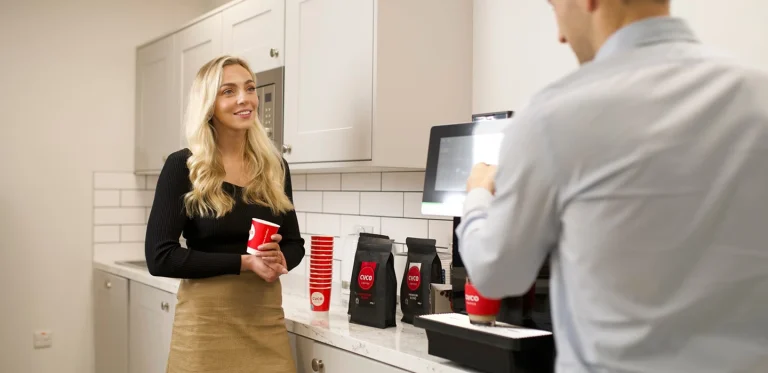
Why Bean-to-Cup Machines Are Ideal for Long-Term Rental

What to Look for in a Coffee Machine Supplier in Ireland
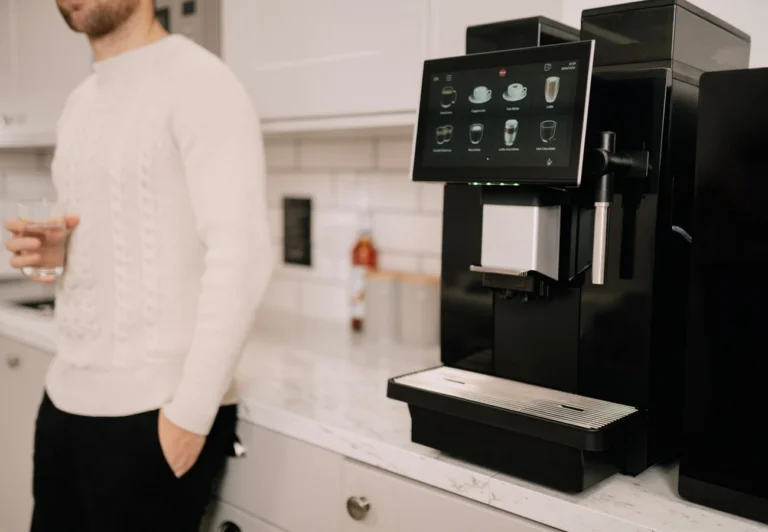
Bean-to-Cup vs Espresso Machine: Which Suits Your Needs?
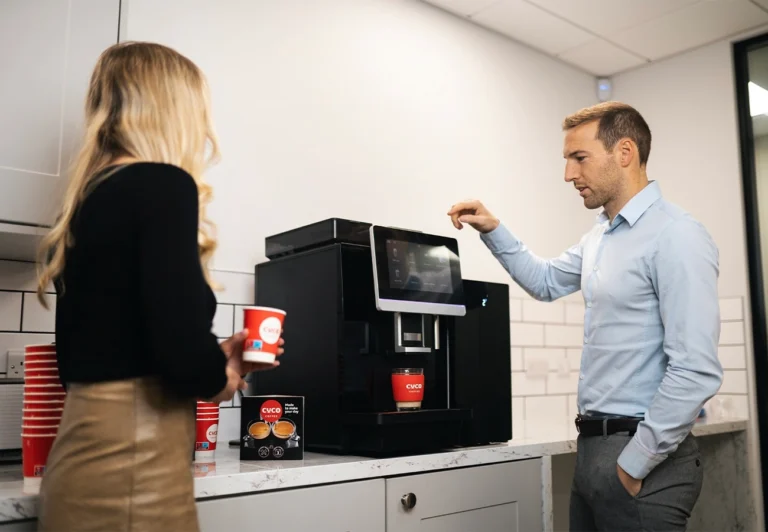
The Complete Guide to Commercial Coffee Machines in Ireland