Skip to content

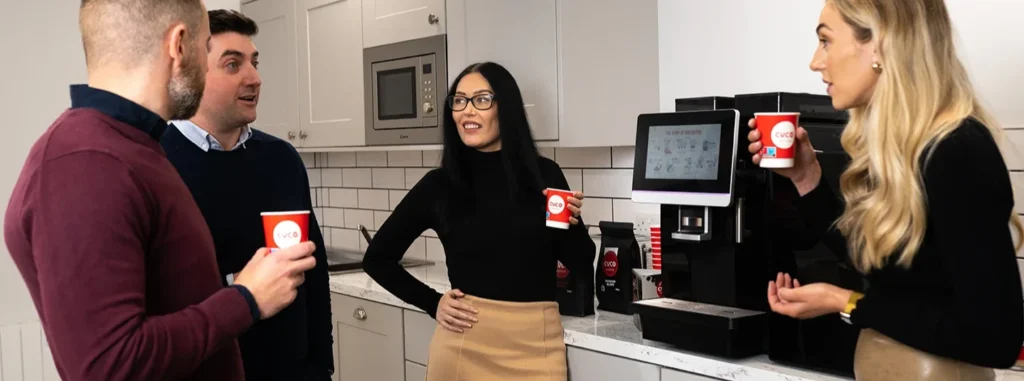
Walk into any thriving Irish office and you’ll notice something. The kettle and jar of instant coffee that once sat in the corner have been replaced by something altogether different. A proper coffee machine. The kind that grinds fresh beans and produces drinks you’d expect from a café.
This shift hasn’t happened by accident. Businesses across Ireland have worked out that quality coffee isn’t a luxury. It’s become part of how companies attract talent, keep teams energised, and make a good impression on visitors.
But choosing the right commercial coffee machine isn’t straightforward. There are different types, different sizes, different price points, and plenty of jargon to wade through. Get it wrong and you end up with a machine that can’t keep up with demand, costs too much to run, or sits unused because nobody can figure out how to work it.
This guide cuts through the noise. Whether you’re setting up your first office coffee station or upgrading an existing setup, we’ll walk through everything you need to know: what commercial machines actually do, how they differ from each other, what size you need, what features matter, and how to make a decision you won’t regret.
No sales pitch. Just practical information based on years of supplying coffee machines to Irish businesses of every size.
What Makes a Coffee Machine “Commercial Grade”?
It’s a reasonable question. If a coffee machine at home can make decent coffee, why spend more on a commercial model?
The answer comes down to three things: volume, durability, and consistency.
A domestic coffee machine might handle six or seven cups a day without complaint. Ask it to produce fifty, and you’ll run into problems. The grinder wears out. The boiler can’t recover heat quickly enough between cups. Components that were designed for occasional use start failing under constant demand.
Commercial coffee machines are built differently. Their grinders use harder steel that maintains a consistent grind over thousands of cups. Their boilers are larger and recover faster. The pumps, seals, and electronics are rated for continuous operation.
Then there’s consistency. When someone in your office makes a coffee, they expect it to taste the same as the one they had yesterday. Commercial machines maintain precise temperatures and brewing pressures cup after cup. Domestic machines struggle to deliver that kind of repeatability once you scale up usage.
There’s also hygiene to consider. Commercial machines are designed to be cleaned properly. Milk systems that self-rinse after each use. Brew groups that can be removed and sanitised. Drip trays that are easy to empty. In a shared workplace environment, these features aren’t optional extras.
None of this means commercial machines need to be complicated. The best modern models are actually simpler to use than many home machines. One touch, one perfect coffee. But underneath that simplicity is engineering built for the demands of a working environment.
Types of Commercial Coffee Machines Explained
Not all commercial coffee machines work the same way. Understanding the different types will help you match the right technology to your workplace needs.
Bean-to-Cup Machines
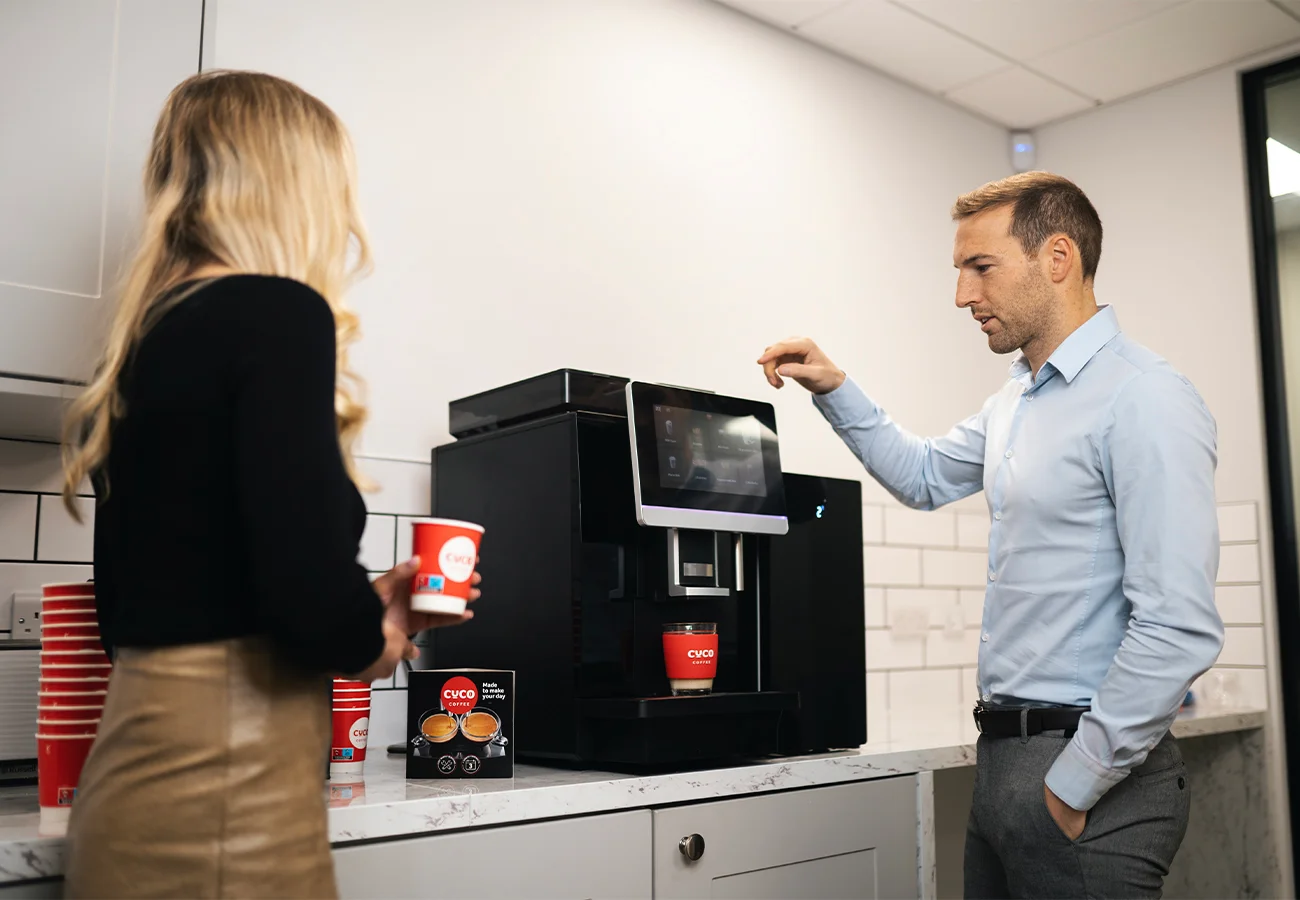
These are the workhorses of modern Irish offices. Bean-to-cup machines do exactly what the name suggests: they take whole coffee beans, grind them fresh for each drink, and produce everything from espresso to flat whites at the touch of a button.
The main advantage is freshness. Coffee begins losing flavour within minutes of being ground. By grinding immediately before brewing, bean-to-cup machines capture flavour that pre-ground coffee simply cannot match.
Modern bean-to-cup machines typically offer anywhere from 15 to 30 different drinks. Staff can choose their preferred style, adjust strength settings, and get café-quality results without any barista training.
Milk-based drinks are handled automatically. The machine draws milk from a connected fridge or container, froths it to the right texture, and combines it with the espresso shot. Cleanup is straightforward: most machines rinse their milk systems automatically after each use.
For most Irish offices, bean-to-cup represents the sweet spot between quality, convenience, and cost.
Traditional Espresso Machines
The type you see behind the counter at coffee shops. A skilled barista controls the grinding, tamping, and extraction manually. These machines produce exceptional coffee when operated by someone who knows what they’re doing.
In an office environment, traditional machines present challenges. They require training. They need more cleaning. And coffee quality varies depending on who’s making it.
Some businesses with dedicated canteen staff or hospitality areas do choose this route. But for self-serve office environments, the complexity usually outweighs the benefits.
Filter Coffee Machines
Filter machines brew larger quantities into a carafe or airpot. They’re common in meeting rooms, reception areas, and canteens where people want to grab a quick cup without waiting for individual drinks to brew.
The coffee won’t match what a bean-to-cup produces, but filter machines have their place. They’re simple, affordable, and can keep coffee warm for guests over extended periods.
Many offices combine a bean-to-cup machine for daily use with a filter machine for meetings and events.
Pod and Capsule Systems
Pod machines use pre-packaged coffee capsules. Each pod contains a measured dose of ground coffee sealed in an airtight container.
The advantages are obvious: consistency and convenience. Every cup uses the same amount of coffee, brewed the same way.
The disadvantages become apparent at scale. Pod costs add up quickly when you’re making dozens of cups daily. The environmental impact of all that packaging is significant. And once you factor in pod pricing, the cost-per-cup often exceeds what you’d pay using fresh beans.
For small offices with light coffee consumption, pods can work well. For anything larger, the economics usually point toward bean-to-cup.
Instant Coffee Machines
At the budget end, instant machines dissolve freeze-dried coffee in hot water. Some add powdered milk for a one-touch latte experience.
The coffee won’t win any awards. But for sites where coffee isn’t a priority, or where a machine serves as backup to other options, instant machines have their place.
How Does a Commercial Coffee Machine Work?
Understanding what happens inside a coffee machine helps you make better decisions about features, maintenance, and troubleshooting.
The Journey From Bean to Cup
A bean-to-cup machine follows the same steps a skilled barista would take, just automated:
Step 1: Grinding
Whole beans drop from the hopper into a precision grinder. The grinder crushes beans to a specific particle size, usually adjustable depending on the drink being made. Espresso requires a fine grind. Filter-style drinks work better with coarser particles.
The quality of the grinder matters enormously. Good grinders produce consistent particle sizes. Poor grinders create dust mixed with larger chunks, leading to uneven extraction and bitter or sour flavours.
Step 2: Dosing
The machine measures a precise amount of ground coffee into the brew chamber. Typically 7-9 grams for a single shot, 14-18 grams for a double. Precision here affects strength and consistency.
Step 3: Tamping and Compression
Ground coffee is compressed to create even resistance when water passes through. Traditional espresso machines rely on a barista’s skill for this. Bean-to-cup machines use a mechanism that applies consistent pressure every time.
Step 4: Brewing
Hot water, typically between 92-96°C, is forced through the compressed coffee at high pressure. The pressure extracts oils, flavours, and caffeine from the grounds. This process takes roughly 25-30 seconds for espresso.
The boiler system is critical. Commercial machines use larger boilers that recover temperature quickly between drinks. Cheaper machines make you wait while water reheats.
Step 5: Milk Frothing
For drinks requiring milk, the machine draws milk through a tube, heats it using steam, and introduces air to create microfoam. The best commercial machines produce silky milk texture comparable to what a trained barista achieves.
Step 6: Dispensing
Everything comes together in the cup. Quality machines control the pour rate and sequence to produce proper layering in drinks like lattes and cappuccinos.
Commercial Coffee Machine Sizes and Dimensions Guide
Choosing the right size machine isn’t just about how much coffee you drink. It’s about physical space, capacity during peak times, and matching the machine to how your office actually operates.
Capacity Ratings
Manufacturers typically express capacity as cups per day or cups per hour. These numbers assume optimal conditions, so apply some scepticism.
A machine rated for 150 cups daily can handle that volume, but not all at once. If your entire office descends on the coffee machine at 9am, you need to think about cups per hour during peak periods, not just daily totals.
Domestic Machines: 1-20 People
For very small teams of up to twenty people, a domestic or light-commercial machine can handle the workload. Daily volumes at this level rarely exceed thirty cups, and usage tends to be spread throughout the day rather than concentrated in short bursts.
These machines are compact enough to sit on any standard countertop. They don’t require plumbing and most run off a refillable water tank. Setup is straightforward, and they suit spaces like small offices, meeting rooms, and executive suites.
The trade-off is durability. Domestic machines aren’t built for years of continuous daily use. If your team grows beyond twenty, you’ll likely start noticing slower recovery times between drinks and more frequent maintenance needs.
Small Commercial Machines: 20-35 People
Once you pass the twenty-person mark, domestic machines start to struggle. A small commercial machine is designed for this level of demand, typically handling between thirty and sixty cups a day without breaking a sweat.
Physical dimensions usually range from 250-350mm wide, 400-500mm deep, and 350-500mm tall. They fit comfortably on most office countertops. Smaller hoppers and water tanks mean more frequent refilling, but for a team of this size that’s a minor task.
These machines are a natural starting point for businesses moving from instant coffee or pods to freshly ground bean-to-cup. They deliver a noticeable step up in quality without requiring major infrastructure changes.
Medium Commercial Machines: 35-50 People
At this level, you need a machine that can handle sustained demand, particularly during morning and post-lunch peaks. Medium-capacity commercial machines typically serve sixty to one hundred cups daily and are built to maintain consistent quality throughout.
Expect dimensions around 300-400mm wide, 500-600mm deep, and 500-700mm tall. Some models at this size require a mains water connection rather than relying on a refillable tank, which also means you’ll need proximity to a water supply and waste drainage.
These machines generally offer a wider range of drinks, larger bean hoppers that need less frequent topping up, and faster recovery times between cups. For most Irish offices in the thirty-five to fifty person range, a medium machine hits the right balance between capability and practicality.
Large Commercial Machines: 50-100 People
Offices with fifty to one hundred people need a machine that can keep up with heavy, consistent demand. Large commercial machines are built for exactly this. They handle between one hundred and one hundred and fifty cups a day and are engineered for continuous operation.
These machines tend to measure 400-500mm wide with corresponding depth and height. Some floor-standing models integrate their own cabinet and fridge for milk storage. Dual grinders for different bean types, larger hoppers, and faster brewing cycles are common at this level.
At this scale, a mains water connection is essential. You’ll also want to consider placement carefully. A centrally located machine reduces walking time and keeps queues manageable during peak hours.
Multiple Machines: 100+ People
Once your team exceeds one hundred people, a single machine, no matter how capable, will create bottlenecks. The better approach is multiple machines placed in different areas of the building.
Spreading machines across floors or departments means shorter walks, shorter queues, and fewer complaints. Each machine can be sized to the area it serves, so you might place a medium unit on a quieter floor and a large unit near the main canteen or break area.
This setup also provides a safety net. If one machine goes down for servicing, the others keep running. For large offices, that continuity matters more than most people realise until it’s gone.
Space Planning Considerations
Beyond the machine’s own footprint, account for:
- Counter depth: Most machines need 50-60cm depth minimum. Many standard office kitchen counters are shallower than this.
- Overhead clearance: Bean hoppers need topping up from above. Check you can open lids fully without hitting wall cabinets.
- Service access: Technicians need to reach the back and sides of machines. Build in at least 10-15cm clearance.
- Water and drainage: Mains-connected machines need proximity to water supply and waste drainage. Factor in plumbing costs if you’re starting from scratch.
- Electrical requirements: Commercial machines draw more power than typical office equipment. Check your circuit can handle the load without tripping.
Quick Reference: Matching Machine Size to Office Size
These are guidelines, not rules. An office of coffee enthusiasts will consume more than one where most people bring tea from home.

Essential Features for Business Coffee Machines
Some features genuinely improve daily operation. Others are marketing fluff. Here’s what actually matters.
Drink Variety
Most offices need basics done well: espresso, americano, cappuccino, latte, flat white. Beyond that, hot chocolate and tea options cover non-coffee drinkers.
Machines boasting 30+ drink options sound impressive, but ask yourself: will anyone actually order a “macchiato with extra foam and chocolate sprinkles”? Probably not. Focus on quality across the drinks people actually want rather than quantity of obscure options.
Ease of Use
This matters more than you might think. If people find the machine confusing, they’ll avoid it. That expensive equipment becomes an underused investment.
Watch for clear displays with logical navigation. Icons that actually communicate what buttons do. Response times that don’t leave users wondering if their selection registered.
Staff turnover means new people constantly learning the machine. Simple interfaces reduce training time and support calls.
Self-Cleaning Cycles
Modern commercial machines should handle basic cleaning automatically. Milk system rinses after each use. Daily cleaning cycles that run overnight. Descaling programmes that prompt when needed.
Machines without these features require more manual attention and are more likely to develop hygiene issues.
Adjustable Settings
Different people like different coffee strengths. Machines that allow strength adjustment, temperature tweaks, and milk ratio changes accommodate personal preferences without requiring compromise.
How to Clean and Maintain a Commercial Coffee Machine
Proper maintenance extends machine life, maintains coffee quality, and protects hygiene standards. Here’s what’s involved.
Daily Tasks
These should become automatic habits for whoever manages your coffee area:
- Empty the drip tray: Coffee residue attracts bacteria and creates unpleasant smells if left to accumulate.
- Wipe external surfaces: The touchscreen, buttons, and drip area need a quick clean with appropriate sanitiser.
- Empty used grounds: Don’t let the grounds bin overflow. Regular emptying prevents compaction and potential mechanical issues.
- Run the automatic clean cycle: Most commercial machines have a daily cleaning programme. Run it at the end of each day.
Weekly Tasks
- Deep clean the drip tray and grounds container: Remove these components and wash thoroughly with hot soapy water.
- Clean the milk system: Even self-rinsing machines benefit from weekly deep cleaning with appropriate cleaning solution.
- Wipe down the bean hopper: Oils from coffee beans build up over time. An occasional wipe prevents rancidity affecting fresh beans.
- Check water filters: Many machines use filtration to protect against limescale. Filters need periodic replacement depending on water hardness in your area.
Professional Servicing
Beyond what office staff can reasonably manage, commercial machines need professional attention. This typically includes:
- Descaling internal components
- Checking and adjusting grinder calibration
- Replacing seals and gaskets showing wear
- Testing pressure and temperature consistency
- Firmware updates where applicable
The frequency depends on usage. High-volume machines might need monthly professional visits. Lighter-use machines can go longer between services.
Some suppliers include regular servicing in their rental or lease agreements. Others charge per visit. Either way, don’t skip this maintenance. Neglected machines break down at inconvenient times and cost more to repair.
Signs Your Machine Needs Attention
Between scheduled services, watch for:
- Coffee tasting different than usual (bitter, sour, weak)
- Longer brewing times
- Unusual noises during operation
- Error messages appearing more frequently
- Water leaking where it shouldn’t
- Milk not frothing properly
Catching issues early usually means simpler, cheaper fixes.
How to Choose the Right Commercial Coffee Machine
With so many options available, making a decision can feel overwhelming. Work through these steps systematically and you’ll arrive at the right choice.
Step 1: Assess Your Actual Needs
Start with honest numbers:
- How many people will use the machine?
- What are peak usage times?
- What drinks do people actually want?
- What’s your physical space constraint?
Don’t inflate requirements “just in case.” A machine that’s too big wastes money and space.
Step 2: Set Your Budget Realistically
Include ongoing costs, not just the initial expense. That rental deal might actually be a better value than buying a machine once you factor in servicing and consumables.
Step 3: Prioritise What Matters
Different offices have different priorities. A legal firm impressing clients needs different things than a tech startup where staff just want fast coffee.
Rank these in order of importance for your situation:
- Coffee quality
- Speed during peak times
- Ease of use
- Drink variety
- Physical appearance
- Environmental credentials
- Total cost
Step 4: Ask Suppliers the Right Questions
When talking to potential suppliers, get specific:
- What’s included in the monthly fee?
- Who handles servicing and how quickly?
- What happens if the machine breaks down?
- Can we trial the machine before committing?
- What’s the contract length and exit terms?
- Do you handle installation and training?
Good suppliers welcome these questions. Evasive answers suggest problems down the line.
Step 5: Arrange a Trial
Any reputable supplier will let you try before you buy. A free coffee tasting in your actual office, with your actual water supply, tells you more than any brochure.
Watch how staff respond. Are they excited to use it? Can they figure it out without detailed instructions? Does the coffee taste good to your team, not just to the salesperson?
Step 6: Consider the Relationship, Not Just the Machine
You’re not just buying equipment. You’re entering a relationship with a supplier who’ll be visiting your premises regularly, responding when things go wrong, and hopefully making your coffee situation genuinely better.
Choose a company you trust to be there when needed.
Frequently Asked Questions
How much coffee does a commercial machine produce per kilogram of beans?
A kilogram of coffee beans typically produces 120-140 cups, depending on strength settings and drink types. Espresso-based drinks use more coffee per serving than americanos or filter coffee.
What water supply do commercial coffee machines need?
Smaller machines work from refillable tanks. Medium and large machines need mains water connection with appropriate filtration. Irish water varies in hardness by region, affecting descaling requirements.
How long do commercial coffee machines last?
Well-maintained commercial machines typically last 7-10 years before requiring replacement. Some components may need replacement during this lifespan, but the core machine should keep working.
Can one machine serve multiple floors?
Generally, no. Walking between floors discourages use and creates inconvenience. Multiple smaller machines placed where people actually work outperform one central large machine in most office setups.
What’s the difference between a commercial and a semi-commercial machine?
Semi-commercial machines bridge the gap between home and commercial equipment. They’re built better than domestic machines but may not handle the volume or continuous operation that true commercial machines manage.
Do I need a separate milk fridge?
Some machines integrate milk storage with cooling. Others need an external fridge. Integrated solutions are more convenient but limit milk container size.
How noisy are commercial coffee machines?
Grinding is the loudest phase, typically 65-75 decibels for a few seconds. This is comparable to normal conversation or a busy office environment. Machines placed in open plan areas usually don’t cause complaints, though very quiet offices might notice.
What happens to the machine at the end of a rental agreement?
Arrangements vary by supplier. Some agreements roll month-to-month after the initial term. Others require return or offer a buyout option. Clarify terms before signing anything.
Ready to Find Your Perfect Coffee Machine?
The right commercial coffee machine transforms your workplace coffee from an afterthought into something people genuinely look forward to. Staff stay energised. Visitors get impressed. And the whole process takes care of itself.
Whatever size your business, whatever your priorities, there’s a setup that fits.
Explore our range of commercial coffee machines, learn about flexible rental options, or simply get in touch for a conversation about what might work for your office.
No pressure. Just coffee expertise, whenever you need it.