Skip to content

Coffee queues don’t usually happen because the machine is “too slow”. They happen because a few small frictions stack up in the same spot. Someone reaches for cups. Someone else opens the fridge for milk. A third person is waiting right in the walkway. Add a quick chat on top, and you’ve got a line.
The good news is you can fix most of it with layout and routine, not rules.
Find the Real Cause, Not the Obvious One
Many offices blame the machine first. Sometimes that’s fair. More often, it’s everything around the machine.
A queue builds when people have to do lots of little steps in a tight space. They stop. They shuffle. They wait. Then the next person arrives and the line starts to form behind them.
Watch The “Coffee Traffic” For Ten Minutes
You don’t need to measure anything. Just watch the area for a short window, twice in one day.
- Where do people approach from?
- Where do they stand while the drink is making?
- Where do they go next?
If the machine sits on a main corridor or at the corner of a narrow kitchenette, people waiting will block the walkway. That’s when an ordinary coffee run turns into a daily frustration.
A small change that helps immediately is creating a clear place to wait beside the machine, not in front of it. Even half a metre of breathing room can change how the area feels.
Fix The Space Around the Machine
If you want quick wins, start with the basics. The goal is fewer “micro-stops”, because that’s what queues are made of.
These changes usually make the biggest difference:
- Keep cups, lids and stirrers within one arm’s reach of the machine
- Put milk close enough that people don’t step away mid-order
- Put the bin at the exit point, where people naturally finish up
- Keep the counter free of clutter, so people can make a drink and clear out quickly
Each tweak is small. Put them together and the line usually shrinks on its own.

Why The Machine Quality Matters
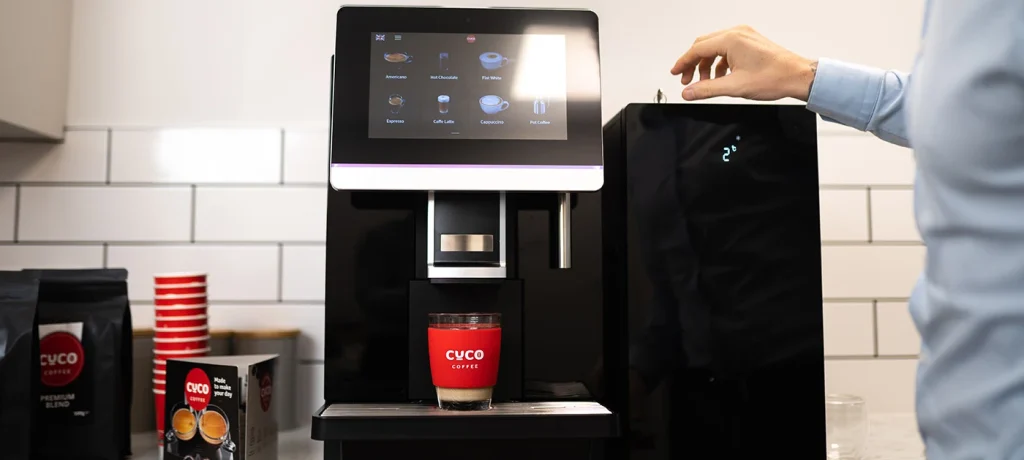
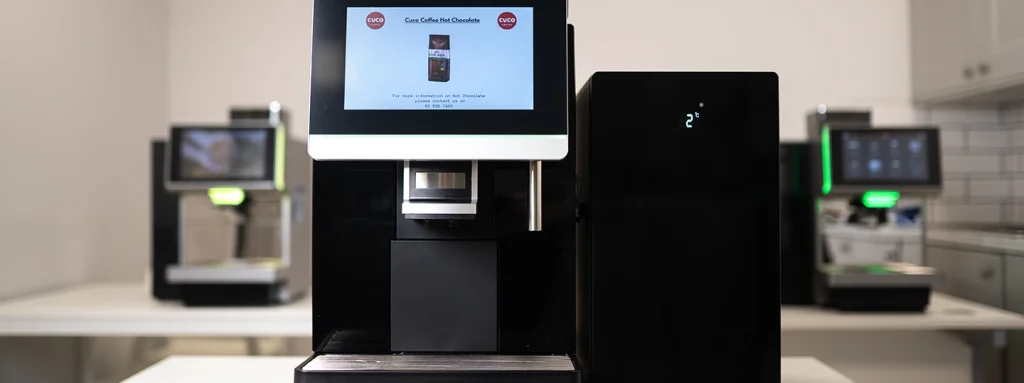
A great bean-to-cup machine earns its keep in two ways. It keeps drinks consistent, and it keeps the process simple so people aren’t hovering, guessing, or re-making coffees.
- Cuco 50 is a strong fit for compact spaces and still delivers café-style drinks at the press of a button, with quick self-cleaning to keep things moving.
- Cuco 100 suits higher-volume workplaces and offers 24 speciality coffees, which helps keep more people happy without anyone heading out for a “better” cup.
- And when demand is heavier, Cuco 200 is built to push through peak times with steady performance, so you don’t get that stop-start feeling when the rush hits.
Stop The “One Person Making Ten Drinks” Jam
In busy offices, one person often ends up doing a round for a meeting or a team. It’s generous, but it turns the coffee area into a bottleneck.
A simple fix is timing. If a meeting host makes drinks before people arrive, the queue usually disappears. Another option is splitting the round into two short batches rather than standing there for ten straight drinks while people line up behind.
No awkward signs needed. It’s just a better rhythm.
Meeting Rooms Create Queues, Even When the Office Isn’t That Busy
Meeting rooms often trigger the biggest coffee rush of the day. It’s not always about staff numbers. It’s about timing. Everyone wants a drink just before they sit down.
If meetings are a big part of your week, it’s worth thinking about a second coffee point closer to those rooms. That might be a smaller unit used mainly for meetings, interviews and visitors. The main kitchen stays calmer, and people stop trekking across the office with drinks in hand.
Larger Offices Usually Need More Than One “Coffee Point”
If teams are spread across floors or departments, one machine becomes a magnet. Everyone ends up heading to the same spot, so the queue forms even when the machine isn’t the problem.
A setup that often works well is having two coffee points:
- One main machine in the highest footfall area
- A second machine where another team naturally gathers
The second point doesn’t need to match the first in size. It just needs to absorb pressure.
Keep The Area Looking Usable
This sounds obvious, but it matters. When the coffee area looks messy, people hesitate. They wait. They ask questions. They hover while someone wipes up a spill.
A tidy counter and a clear layout keep the flow moving. People come in, make the drink, and leave. That’s the whole aim
A Quick Way to Tell If You Need a Second Machine
If queues happen at the same time every day and the layout changes don’t shift the problem, you’re probably dealing with demand rather than behaviour.
That’s the point where adding a second machine, or splitting usage between two locations, tends to solve the issue faster than anything else.
How We Help Offices Reduce Queues
Most people focus on the office coffee machine. We look at the flow as well.
We can call out, have a look at the coffee area, and suggest a few practical changes to improve the flow when it’s busy. If you’d like to try the setup first, we can do a free coffee tasting in your workplace or arrange a free one-week trial so your team can use it during a normal week.
Once it’s in place, we keep things running with free weekly service, next-day delivery for coffee, and short three-month contracts on Irish packages. That way, you can adjust if the office routine changes.
A Smoother Coffee Run Starts Here
If the coffee area jams up at the same times each day, it’s usually fixable. It might be the layout, meeting traffic, or simply a sign you need to split demand across two points.
If you want help choosing the best approach, book a free coffee tasting or a free one-week trial and we’ll guide you from there.